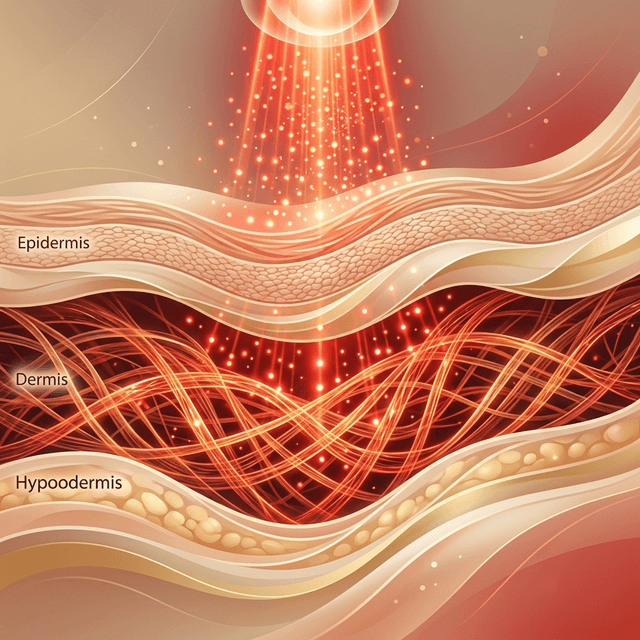
Red light therapy — also known as photobiomodulation (PBM) or low-level light therapy (LLLT) — has become one of the fastest-growing trends in skincare. But beneath the social media buzz and celebrity endorsements, there's actually a substantial body of peer-reviewed research. Let's examine what the science supports and where the evidence is still developing.
How Red Light Therapy Works
The mechanism of action centers on cytochrome c oxidase, a photoreceptor enzyme in your mitochondria (the energy-producing organelles in every cell). When exposed to specific wavelengths of red and near-infrared light:
- Photons are absorbed by cytochrome c oxidase
- This triggers increased production of adenosine triphosphate (ATP) — your cells' primary energy currency
- The boost in cellular energy supports various repair and regeneration processes
- Downstream signaling promotes collagen synthesis, reduces inflammatory markers, and increases local blood circulation
This isn't fringe science. The mechanism has been documented in hundreds of peer-reviewed papers since the early 2000s, with NASA's research on wound healing in space being one of the earliest modern catalysts for the field.
Evidence-Backed Benefits
1. Collagen Production and Anti-Aging
Evidence strength: Strong
Multiple randomized controlled trials have demonstrated that red light at 630–660nm stimulates fibroblast activity and increases collagen density. A landmark 2014 study published in Photomedicine and Laser Surgery found that participants using red light therapy showed clinically significant improvements in skin complexion, collagen density (measured via ultrasound), and skin roughness after 30 treatment sessions.
Near-infrared wavelengths (830–850nm) appear to complement red light by reaching deeper dermal layers where collagen networks originate.
2. Acne Reduction
Evidence strength: Moderate to Strong
Blue light (415nm) has the strongest evidence for acne treatment, as it targets the porphyrins produced by P. acnes bacteria. When combined with red light (630–660nm), which addresses the inflammatory component of acne, the combination therapy shows better results than either wavelength alone.
A 2006 study in the British Journal of Dermatology found that combined blue-red LED therapy resulted in a 76% reduction in inflammatory acne lesions after 12 weeks.
3. Inflammation and Redness
Evidence strength: Moderate
Red and NIR light have demonstrated anti-inflammatory effects in both laboratory and clinical settings. The mechanism involves modulation of reactive oxygen species (ROS) and reduction of pro-inflammatory cytokines like TNF-α and IL-6.
For skin conditions involving chronic inflammation — including rosacea-associated redness — some practitioners report benefits, though large-scale controlled studies specific to these conditions are still limited.
4. Wound Healing and Recovery
Evidence strength: Strong
This is one of the best-documented applications of photobiomodulation. NASA's original research and subsequent studies confirmed that red and NIR light accelerate wound healing by enhancing cellular proliferation and migration. This extends to post-procedure recovery, with some dermatologists recommending LED therapy after chemical peels, microneedling, and laser resurfacing.
What the Evidence Doesn't Support
It's equally important to note what current research has not confirmed:
- "Instant" results — Consistent use over weeks is required for visible changes
- Weight loss — Some devices claim fat-reduction benefits, but evidence for facial masks affecting body composition is essentially non-existent
- Replacing medical treatments — LED therapy is complementary, not a substitute for prescribed treatments for conditions like severe acne, psoriasis, or skin cancer
How to Maximize Results
- Consistency matters more than intensity. 10–20 minutes per session, 3–5 times per week, for at least 8–12 weeks
- Clean skin first. Makeup, sunscreen, and thick serums can block light penetration. Use LED therapy on clean skin, then apply your skincare routine afterward
- Wavelength specificity. Match your wavelength to your concern: 630–660nm for anti-aging, 415nm for acne, 830–850nm for deeper tissue support
Explore our LED face mask collection to find devices with verified wavelength specifications.
Frequently Asked Questions
Is red light therapy safe for all skin types?
Red light therapy is considered safe for all Fitzpatrick skin types (I–VI). Unlike UV-based treatments, it doesn't cause hyperpigmentation or increase melanoma risk. However, anyone on photosensitizing medications should consult their dermatologist first.
Can I use red light therapy with retinol or other actives?
Yes, but timing matters. Use LED therapy on clean skin before applying actives. Some dermatologists suggest that LED therapy may actually enhance the penetration and efficacy of topical ingredients applied immediately afterward, though this area needs more research.
From article to shortlist
Open the catalog with concern filters, compare models side by side, or read a focused buying guide.
Find Your Perfect LED Face Mask
Browse our curated collection of verified LED face masks. Compare wavelengths, materials, and specs to find the right mask for your skin goals.
Browse Collection →