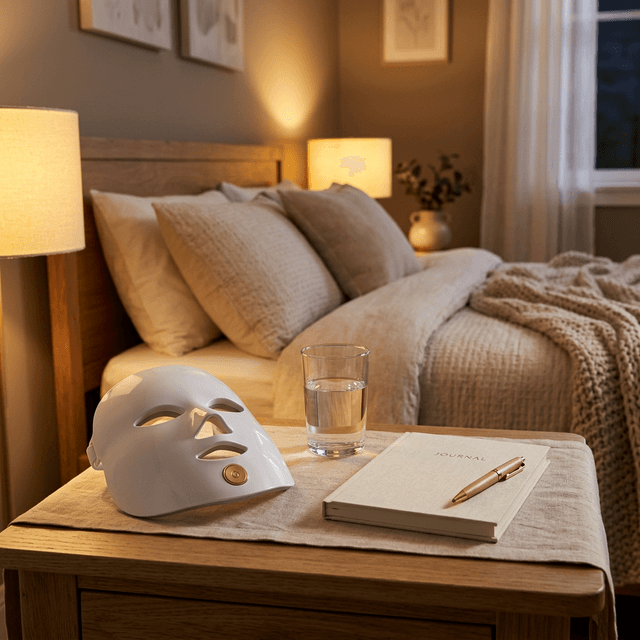
Professional LED light therapy treatments can cost $150–$300 per session. With at-home devices now available at a fraction of that cost, more people are bringing this technology into their daily routines. Here's everything you need to know to get started.
Why At-Home LED Therapy Has Taken Off
The global LED face mask market is projected to reach $882 million by 2034, up from $358 million in 2025. Search interest in "LED face masks" has grown over 140% in the past five years. Several factors are driving this growth:
- Cost efficiency — A quality at-home mask pays for itself after 3–5 professional sessions
- Convenience — 10–20 minute sessions that fit into any routine, no appointments needed
- Technology improvement — Consumer devices now feature the same wavelengths and LED densities as professional equipment
- Research awareness — Growing body of peer-reviewed studies has moved LED therapy from "wellness trend" to evidence-based skincare
Types of At-Home LED Devices
LED Face Masks
The most popular form factor. A mask-shaped device that covers the full face (and sometimes neck) with an array of LED diodes. Benefits include hands-free operation and uniform coverage.
Sub-types:
- Flexible silicone masks — Lightweight, conform to facial contours, most comfortable for daily use. Typical LED count: 100–300 per panel.
- Rigid shell masks — More durable, often higher LED counts (300–500+). Slight gap between mask and skin.
- Combination face + neck panels — Extended coverage for jawline and neck aging concerns.
LED Panels and Wands
Handheld devices that target specific areas. Useful for spot treatments but require manual movement and don't offer the hands-free convenience of masks.
What to Look for in Your First Device
| Feature | Must-Have | Nice-to-Have |
|---|---|---|
| Wavelengths | At least 660nm (red) + 850nm (NIR) | 415nm blue for acne |
| LED Count | 100+ diodes minimum | 200+ for better coverage |
| Eye Protection | Built-in shields or goggles included | Adjustable opacity |
| Comfort | Tolerable for 15–20 min sessions | Silicone flex for best fit |
| Wireless | No (wired is fine) | Yes, for convenience |
How to Build Your LED Therapy Routine
Phase 1: Getting Started (Weeks 1–2)
Start conservatively. Use your device for 10 minutes per session, once daily. This gives your skin time to acclimate and lets you identify any sensitivity. Apply on clean, bare skin — no makeup, sunscreen, or thick creams.
Phase 2: Building Consistency (Weeks 3–6)
Increase to 15–20 minutes per session. Continue daily use. This is the phase where consistency matters most — skipping multiple sessions will slow progress. Consider anchoring your LED session to an existing habit (e.g., right before your evening skincare routine).
Phase 3: Seeing Results (Weeks 7–12)
You should start noticing visible improvements: smoother texture, more even skin tone, reduction in fine lines. Acne users with blue light should see fewer breakouts by now. Continue daily or move to 4–5 sessions per week.
Phase 4: Maintenance (Ongoing)
After 12 weeks, you can reduce to 3–4 sessions per week. The benefits are cumulative but do require ongoing maintenance. Think of it like exercise — the results last as long as you keep up the routine.
Cost Comparison: At-Home vs Professional
| Professional LED Facial | At-Home LED Mask | |
|---|---|---|
| Per session cost | $150–$300 | $0.50–$1 (electricity) |
| Upfront investment | $0 | $50–$400 (device) |
| 12-week program (36 sessions) | $5,400–$10,800 | $50–$400 total |
| Wavelength control | Practitioner-selected | User-selected |
| Convenience | Appointment required | Anytime at home |
| Professional guidance | Yes | No (self-guided) |
Common Misconceptions
"Expensive devices work better than affordable ones"
Not necessarily. What matters is verified wavelengths, adequate LED density, and proper irradiance — not price tag or packaging. Some affordable devices use the same quality diodes as premium brands.
"You need 7 different light colors"
Most of the evidence supports just two wavelengths: red (660nm) and near-infrared (850nm), with blue (415nm) as an add-on for acne. A 7-color device isn't harmful, but the additional colors (green, cyan, yellow, white) have substantially less research behind them.
"LED therapy replaces your skincare routine"
It complements your routine — it doesn't replace it. Think of LED therapy as a foundation that enhances how your skin responds to the products you already use. Cleanser, moisturizer, and sunscreen are still essential.
Ready to find your first LED face mask? Take our skin quiz for a personalized recommendation, or browse our full catalog to compare specs.
Frequently Asked Questions
How long until I see results from at-home LED therapy?
Most users report noticeable improvements in skin texture and tone after 6–8 weeks of consistent use (3–5 sessions per week). Fine line reduction and collagen improvements typically become measurable at the 10–12 week mark.
Is at-home LED therapy as effective as professional treatments?
Professional devices may have higher irradiance (power output), potentially delivering results faster. However, the convenience of daily at-home use can compensate — frequent shorter sessions can match or exceed the results of occasional professional treatments, according to some researchers.
From article to shortlist
Open the catalog with concern filters, compare models side by side, or read a focused buying guide.
Find Your Perfect LED Face Mask
Browse our curated collection of verified LED face masks. Compare wavelengths, materials, and specs to find the right mask for your skin goals.
Browse Collection →